Imagine stepping into an environment where everything around you feels real. You don’t just see it: you hear it, feel it and take part in it. That, in essence, is an immersive experience. In recent years the concept has moved from something experimental to part of everyday life. Museums, events, video games, marketing and education use it to capture real attention.
We live surrounded by stimuli, which makes connecting with people harder every day. This is where the immersive experience comes in. It does not interrupt: it invites. It does not force: it envelops. In this article you will discover what makes it so powerful, why it is so engaging and how it is applied in different fields. No jargon, and with clear examples.
An immersive experience is one that actively involves the person within an environment, physical or digital, making them feel part of what is happening. It is not only about looking, but about living it.
Unlike traditional formats, here the user is not a passive spectator. They interact, make decisions and perceive stimuli through several senses.
This can include:
The goal is clear: to create a real sense of presence.
Although we usually associate it with virtual or augmented reality, it does not always require advanced technology. A well-designed escape room or an interactive play can also be very powerful immersive experiences.
The key lies in how our brain works. When we live something actively, we remember it better and feel it more intensely.
An immersive experience triggers emotions, and emotions create memories. When we feel curiosity, surprise or enthusiasm, the brain releases dopamine, which reinforces attention.
Taking part makes us feel like protagonists. That sense of control increases interest and reduces distraction. You are not watching something: you are inside it.
KEY TIP: People remember up to 80% of what they do, compared with 20% of what they read. Immersion multiplies the impact of the message.
There are many ways to create immersion. These are the most common today.
It uses goggles or headsets to transport the user to a completely digital environment. Widely used in video games, training and simulations.
It overlays digital elements on the real world. Widely used in retail, tourism and education.
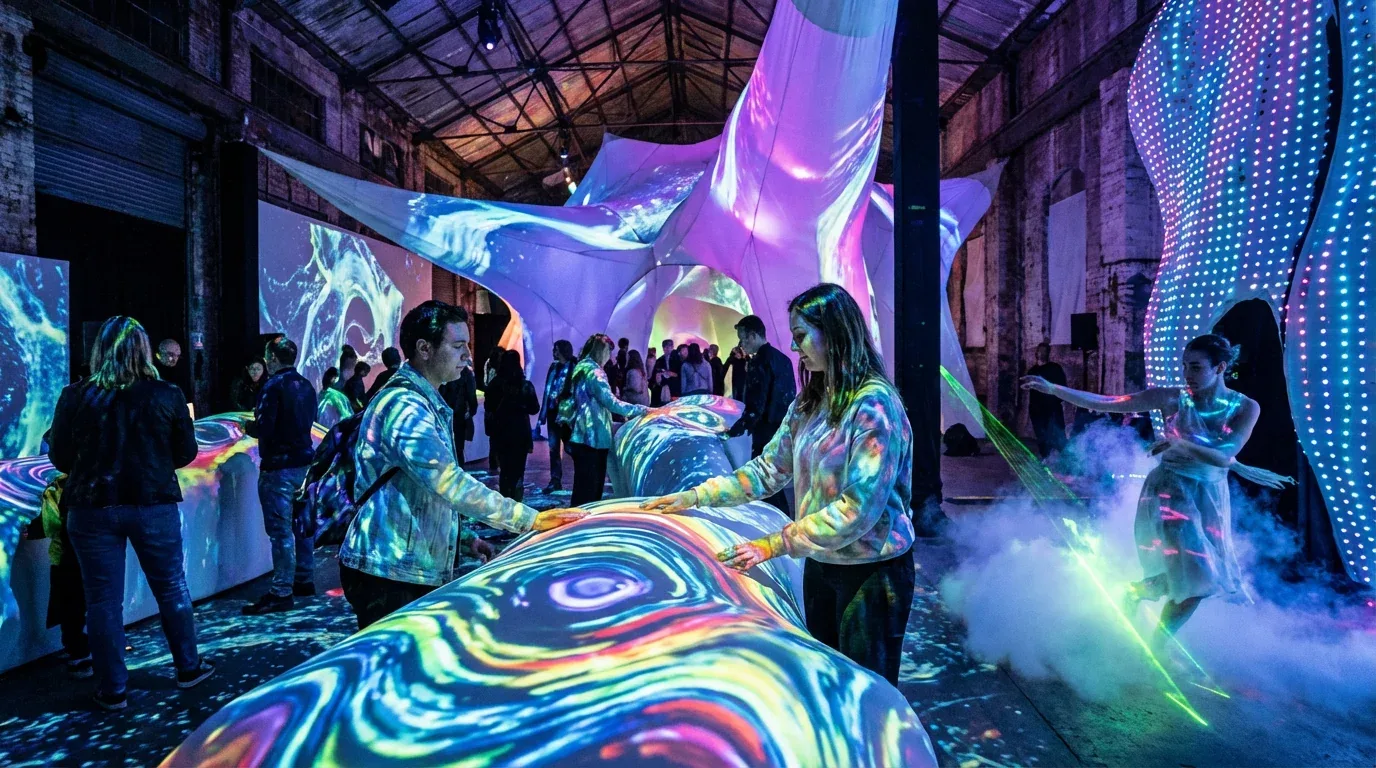
Installations with light, sound, projections and sensors that react to the visitor’s movement.
Stories where the user chooses the path. Very common in video games and interactive content.
Seeing it in action helps to understand its potential.
Many museums have moved from static showcases to enveloping rooms with 360º projections and ambient sound. Visitors do not just learn: they live the story.
Brands create spaces where the audience interacts with the product. This creates memory and emotional connection.
Immersive simulations make it possible to learn by doing, from training surgeons to preparing technical teams in safe environments.
Adopting this approach has clear advantages.
These benefits explain why more and more projects are choosing this kind of format.
You do not need a big budget to begin. What matters is the approach.
What do you want the person to feel or learn? Without a clear goal there is no real immersion.
Think about their journey: what they see first, what they do next and how they interact.
Technology should support the experience, not distract from it. Sometimes less is more.
Test with real people. Observe reactions and refine the details.
Not everything works. These mistakes are frequent.
Avoiding these mistakes makes the difference between impressing and truly connecting.
In the end, an immersive experience is not about impressing for the sake of it. It is about creating memorable moments. When a person feels inside the story, the message reaches further and lasts longer.
If you are thinking of applying this approach, start small. Observe, learn and improve. You can find ideas by browsing our immersive experience events. Immersion is not a fad. It is a more human way of communicating, teaching and connecting. And that, today more than ever, makes the difference.
Please subscribe to newsletter to get updates from us.
Free invitations to our openings, open calls for artists and our programme, before anyone else.