



Part of the projects AI4Future → · IMMENSIVA →
“Worldbuilding” is an activity typically associated with the creation of landscapes, spaces and universes in video games. However, it also can be and it is understood as the process of making up a coherent sense of place and time in narratives, stories, texts, and plays. It is a complex endeavour that combines several types of creativity at different levels of detail, complexity and temporality.
Artificial Intelligence techniques have been applied to several of the dimensions of world building. With the help of AI, narrative arcs have been articulated, character development has been set in motion, landscapes built, masses orchestrated, evolving adventures and roles in games sketched, interaction of characters with users in video games and between the characters themselves have been also been devised and implemented with the help of AI techniques. Also whole scripts for short films have been created with the help of AI, filmmaking can be seen as a way to create worlds too.
Techniques from generative neural networks, evolutionary algorithms, deep learning, natural language generation and many more methods from AI can be seen applied in one way or another into several activities fully accepted as “worldbuilding” or contributing partially to it.
AI techniques can be daunting to the non-technically minded. The requirements of creative practices are difficult for technical people to translate into operating tools and software. Fortunately, some individuals live simultaneously in these two worlds and successfully come up with both useful tools and powerful worlds.
It is time to share possibilities and challenge present practices and solutions.
To this end, we propose an intense short workshop to show different results, open questions, criticizes present solutions and explore new possibilities.
Through sharing, practicing and reflecting on what has happened. And what hasn’t but would be great if it could happen.
We have devised a workshop addressed to practitioners of worldbuilding in the most ample definition of the term and also for interested people in the areas of video games, narratives (virtual, augmented or otherwise), script writing, video production, filmmaking, choreography, playwriting, gaming, role playing. Also for the general public.
Goals
- To share the state of the art of research and application of AI in World Building
- To discuss the use of AI in World Building, its current achievements and shortcomings
- To spot and define new challenges for research and development
- To showcase current and innovative applications of AI in World Building
- To create a roadmap to guide the development of the works of the consortium and to contribute to them to the wider community around AI & Culture
- To communicate with a wider audience the possibilities and shortcomings of AI for Worldbuilding but also to collect their views, interests, suggestions and needs
Addressed to:
- Members of the consortium
- Researchers/artists/practitioners/activists in the area of worldbuilding: video games, script writing, filming, animation, artists
- The general public
Format: hybrid (on location + online)
- Invited presentations
- Short presentations
- Panel Discussions
- Lab sessions
- Performances
REGISTER HERE : -> AI4FUTURE 3rd & 4th June
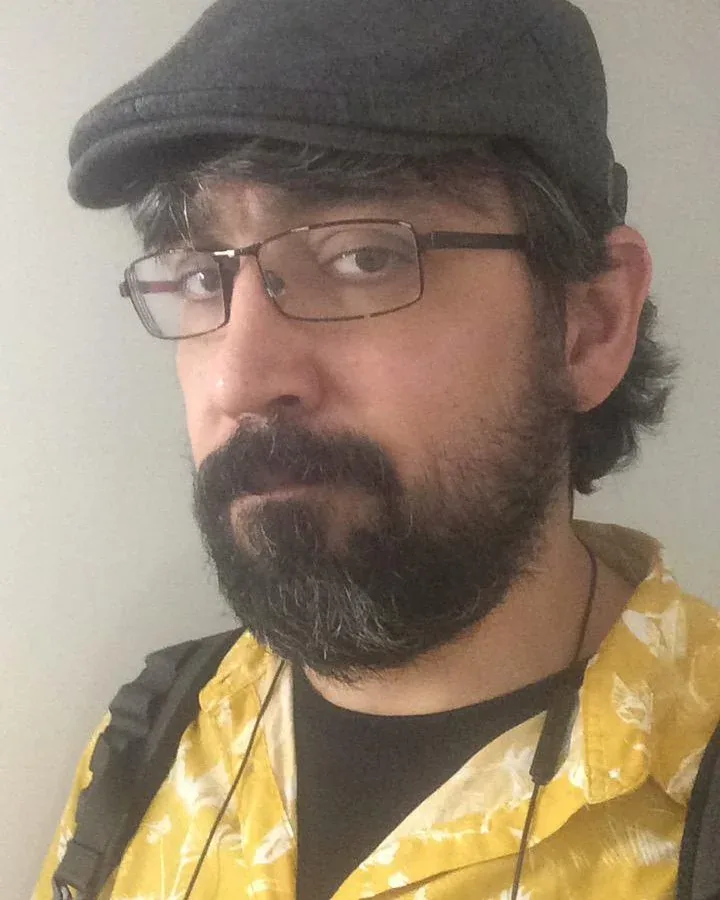
Joan Pons
CITM – ENTI – TEC
Game design teacher at the Polytechnical University of Catalonia (UPC-CITM): Game design I (Foundations), Game design II (Narrative) and Level design.
Game design teacher at the University of Barcelona (UB-ENTI): Basic mechanics of videogames and Level design. Level design teacher at Universitat Pompeu Fabra (Tecnocampus): 2D-3D Level design methodologies and frameworks.
Unity and C# teacher at CEV Barcelona (2019) and creative director at Arhat Games, a video games studio focused on virtual reality and serious games (2017-2019). Web developer and teacher at the University of Barcelona (UB-CRAI) from 2006 to 2018, managing a team of 15 developers and 10-20 projects each year.
He also develops board games (member of Ludo Board, the association of board game designers of Spain) and has played pen and paper RPGs for 25 years. Currently working on his PhD at the GAME research group of the UOC, Open University of Catalonia.
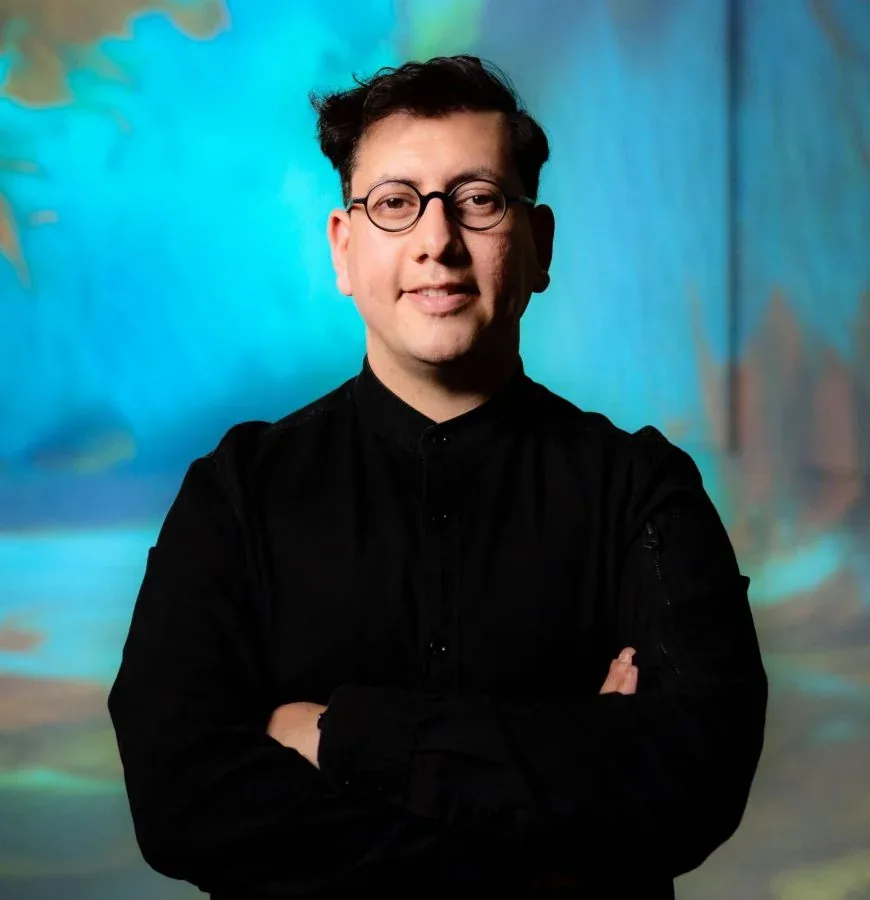
Refik Anadol
Refik Anadol Studio
Refik Anadol (b. 1985, Istanbul, Turkey) is a media artist, director and pioneer in the aesthetics of data and machine intelligence. His body of work locates creativity at the intersection of humans and machines. Taking the data that flows around us as the primary material and the neural network of a computerized mind as a collaborator, Anadol paints with a thinking brush, offering radical visualizations of our digitized memories and expanding the possibilities of architecture, narrative and the body in motion.
His site-specific AI data sculptures, live audio/visual performances and immersive installations take many forms, encouraging us to rethink our engagement with the physical world, its temporal and spatial dimensions, and the creative potential of machines.

Eva Jäger
Curator
Eva Jäger is Associate Curator at Serpentine Galleries London (Arts Technologies Team, R&D Platform) and Co-Investigator of the Creative AI Lab along with Professor Mercedes Bunz, a collaboration between King’s College London and Serpentine. She also works with Guillemette Legrand under the studio name Legrand Jäger, researching emerging applications of computation and information technologies —emotional recognition, movement recognition, natural language processing— using performance, film and large tech-integrated objects as a way of diagramming the belief systems they create.
Currently working on Future Art Ecosystems Vol. 3, an annual strategic briefing launched in 2020 that provides concepts, references, language and arguments for the construction of 21st century cultural infrastructure; a forthcoming paper with Dr Mercedes Bunz, “Inquiring the Backends of Machine Learning Artworks: Making Meaning by Calculation”, to be presented at Art Machines 2; and a forthcoming performance with Studio Legrand Jäger at the Victoria and Albert Museum, London.
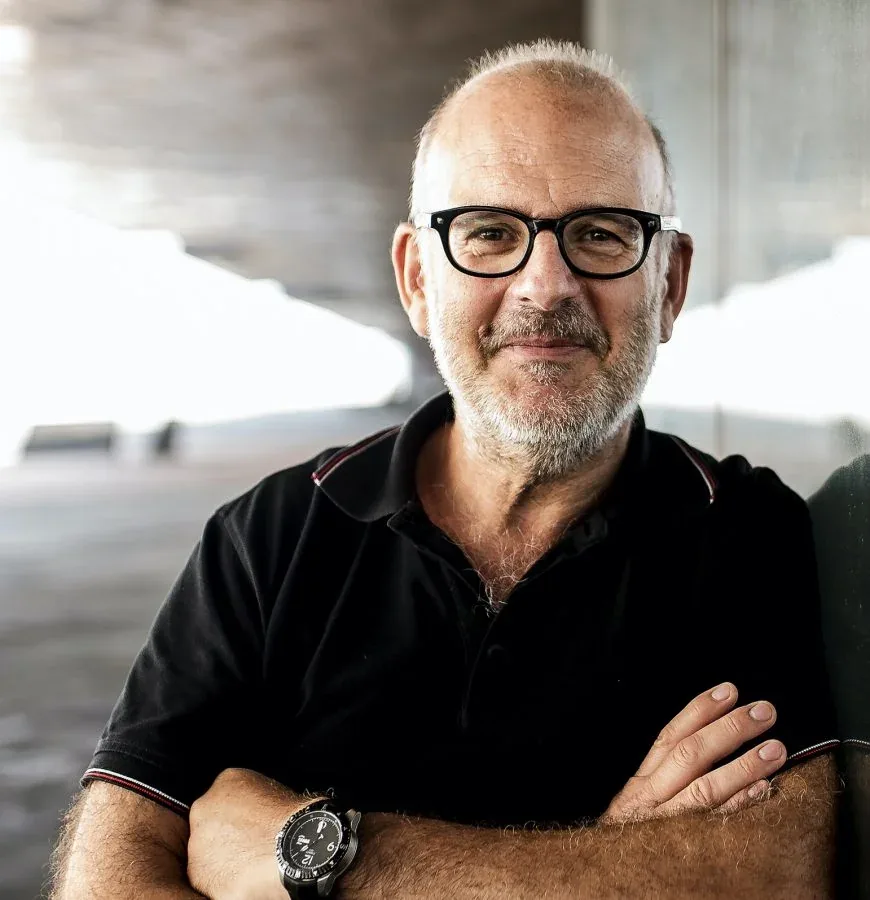
Ramon Sangüesa
Founder and Director of Equipocafeína, a research and communication platform
With a PhD in Artificial Intelligence and Machine Learning and 20 years of research and teaching at the Polytechnic University of Catalonia (Barcelona), Ramon combines these academic aspects with his dedication to innovation, social innovation and transdisciplinarity. He was Director of Application Development at the i2Cat Foundation for advanced internet in Catalonia from its foundation.
He is an Affiliate Research Fellow at the Center for Organizational Innovation at Columbia University in New York and a Senior Fellow at the Strategic Innovation Laboratory (SLAB) at the Ontario College of Art and Design. He has actively researched the social implications of technology, through initiatives that bring technology to citizens and let citizens shape new technologies: the Breakout projects (with the Architectural League of New York and the Institute for the Future), Urbanlabs in Barcelona, and Citilab, the citizens’ laboratory of Barcelona, where he was one of the founders and director of innovation until 2010.

Francisco Bernardo
Interdisciplinary researcher
Francisco Bernardo, PhD, is an interdisciplinary research scientist, a software engineer and a multi-instrumentalist. His research focuses on the design and engineering of creative AI toolkits for education and the empowerment of communities of practice. He is the co-creator of Sema, a playground for live coding music and machine learning, co-designer of the RAPID-MIX API and contributor to other open-source innovations. He performs solo with experimental interactive audiovisuals as MNISTREL, and as one third of the Sema live coding trio.